Why Sourcing Matters More Than You Think
I used to think rye was rye. You buy a bag of grain, you soak it, you sterilise it, you inoculate it. How different can one batch of rye berries be from another? Turns out: catastrophically different.
The first 30 or so bags I ever prepared came from a pet shop. Small bags of "whole rye" marketed for bird feed. They were cheap. about £1.80 per kilo. and I thought I was being clever saving money. What I was actually doing was introducing contamination before I'd even opened my pressure cooker. The grain was dusty, inconsistently sized, and I later found out it had been sitting in that shop's storeroom for the better part of a year. My contamination rate with that grain was somewhere around 35%. I thought I was bad at sterile technique. I wasn't. I was bad at buying grain.
When I switched to agricultural-grade rye from a proper feed merchant, my contamination rate dropped to under 5% overnight. Same pressure cooker, same bags, same inoculation technique. The only variable that changed was the grain itself. That single switch probably saved me hundreds of pounds in wasted supplies and weeks of frustration.
Contamination Rate by Grain Source
Online mushroom supply (2 months, 28 bags): 14% contamination
Agricultural feed merchant (6 months, 120+ bags): 4% contamination
Same sterilisation protocol (15 psi, 120 min) across all three sources.
Where to Buy Rye Grain
Agricultural Feed Merchants (Best Option)
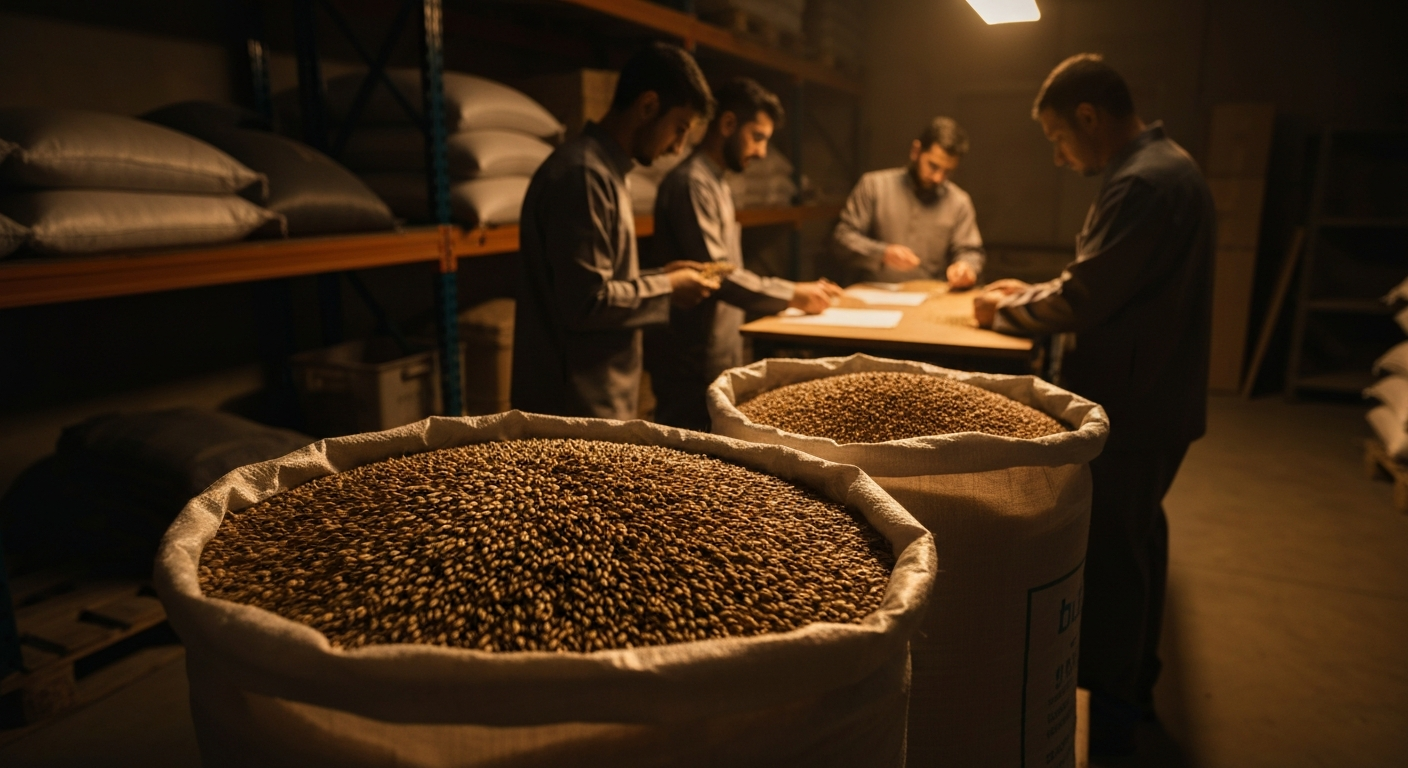
This is where you want to be. Agricultural feed merchants deal in bulk grain for livestock. The rye they sell is cleaned, graded, and stored properly because their customers. farmers. would notice and complain if it wasn't. You're buying grain that's been through industrial cleaning equipment: destoners, aspirators, gravity tables. The result is consistently sized, clean kernels with minimal dust and no insect damage.
The downside is that most feed merchants have minimum order quantities. You're typically looking at 25 kg bags as the smallest unit. That's fine once you're doing regular batches, but it can feel like a lot when you're just starting out. Don't let that put you off. 25 kg of rye will make roughly 22 bags at 2.5 lbs (1.1 kg) per bag, and properly stored grain lasts months.
Finding a local feed merchant is straightforward. Search for "agricultural merchants" or "farm supplies" near you. In the UK, most market towns have at least one. Phone ahead and ask if they stock whole rye berries (sometimes listed as "rye grain" or "feed rye"). Some merchants will even let you inspect the grain before buying, which is ideal.
Online Mushroom Cultivation Suppliers
There are several UK-based suppliers who sell rye grain specifically marketed for mushroom cultivation. The grain is usually decent quality. often sourced from the same agricultural suppliers you could buy from directly. but you'll pay a premium for the repackaging and the "mushroom-grade" label. Expect to pay 2-3x more per kilo compared to agricultural prices.
I used these when I was starting out and couldn't commit to 25 kg bags. The quality was generally fine, though I did get one batch that was clearly old stock. the kernels were dull, slightly shrunken, and the moisture content was well below what I'd expect from fresh grain. That batch had noticeably slower colonisation.
Pet Shops and Bird Seed Suppliers (Avoid)
I've already told you about my experience with pet shop rye, but let me be more specific about why it's problematic. Bird seed rye is not cleaned to the same standard as agricultural grain. It often contains broken kernels (which absorb water unevenly and create bacterial pockets), dust (which is basically a contamination inoculant), and sometimes visible mould or insect frass. The storage conditions in a pet shop are nothing like a grain merchant's warehouse. The grain sits in thin plastic bags on a shelf, often near other organic products, in a warm shop environment. It's a contamination factory.
I've seen people on forums say "pet shop rye works fine for me." Maybe their local pet shop has better stock. Maybe they're running an aggressive sterilisation protocol that compensates. But in my testing, the data is clear: the source matters enormously, and pet shop grain consistently underperforms.
Supermarkets and Health Food Shops
You can buy "rye berries" from health food shops and sometimes larger supermarkets. These are food-grade, which means they're clean, but they're packaged in tiny quantities (500g-1kg) at absurd prices. £3-5 per kilo. If you need a small amount for a test batch, this is an option. For regular production, it's completely uneconomical.
What to Look For in Quality Grain
Kernel Size and Uniformity
Good rye berries are plump, uniform in size, and roughly 6-8mm long. You want consistency because inconsistent kernel sizes absorb water at different rates, leading to uneven hydration across the bag. A handful of grain should look like a handful of the same thing, not a random assortment of large, small, and broken pieces.
I've found that the best batches have less than 5% variation in kernel size. You can't measure this precisely at the feed merchant, but you can eyeball it. Pour some grain into your palm and look. If most kernels are the same size with the odd outlier, that's fine. If you're seeing a spread from 4mm fragments to 10mm whoppers, find a different batch.
Cleanliness
Clean grain has minimal dust. When you plunge your hand into the bag and pull it out, your fingers shouldn't be coated in fine powder. A tiny amount of chaff is normal and harmless, but visible dust clouds when you pour the grain are a red flag. Dust is organic debris. broken kernel fragments, soil particles, fungal spores from storage. and every speck of it is a potential contamination source.
Freshness and Moisture
Fresh rye has a distinctive nutty, slightly sweet smell. If the grain smells musty, sour, or like nothing at all, it's old or has been improperly stored. Fresh kernels have a slight sheen to them. not wet, but not completely matte either. Old grain looks dull and feels lighter than you'd expect.
The moisture content of raw rye berries should be around 12-14%. Below 10% and the grain is over-dried (takes longer to hydrate, sometimes won't hydrate evenly). Above 16% and you're looking at grain that's been stored in damp conditions and may already be harbouring mould spores internally. If you have a grain moisture meter (around £30 from Amazon), checking incoming grain is a worthwhile habit. If you don't, the smell and visual checks described above will catch the worst offenders.
No Insect Damage
Inspect a handful of grain closely. Look for tiny holes in kernels (weevil damage), fine webbing between grains (moth larvae), or the insects themselves. Any sign of insect activity means the grain has been stored poorly and the internal structure of the kernels is compromised. Insect-damaged grain hydrates unpredictably and has elevated bacterial loads. Bin it.
Don't Skip the Inspection
Even with a trusted supplier, check every new batch. I once got a 25 kg bag from my regular feed merchant that had clearly been stored near something damp. the bottom third of the bag was noticeably darker and smelled off. I caught it because I always open and inspect before committing. That one check saved me 8-10 bags worth of wasted time.
UK Suppliers and Pricing
Prices as of early 2026. These fluctuate with harvest seasons and commodity markets, but the relative pricing between sources stays roughly consistent.
UK Rye Grain Pricing (per kg)
Online mushroom supply (5 kg bag): £1.60-2.40/kg
Health food shop (1 kg bag): £3.00-5.00/kg
Pet shop bird seed (2 kg bag): £1.20-1.80/kg
Cost per prepared bag (1.1 kg grain): £0.60-0.88 (agricultural) vs £1.76-2.64 (mushroom supply)
For UK-based growers, your best bet is to search for your nearest agricultural merchant. Chains like Mole Valley Farmers, Wynnstay, and Countrywide Farmers all stock whole rye, though availability is seasonal. rye is harvested in August/September in the UK, so prices tend to be lowest in autumn and highest in late spring/early summer.
If you're buying online, look for suppliers who list the grain's origin, harvest year, and storage conditions. Any reputable supplier will provide this information. If they don't list it and won't tell you when asked, find someone else.
Red Flags. When to Walk Away
Over the years I've developed a mental checklist for evaluating grain. If any of these are present, I don't buy it, regardless of price:
- Visible dust clouds when pouring. contamination risk is too high
- Musty or sour smell. indicates mould or bacterial activity in storage
- More than 10% broken kernels. broken kernels absorb water too fast and create wet spots
- Insect damage or webbing. compromised kernel integrity and elevated microbial load
- Dull, shrunken appearance. grain is old and may not hydrate properly
- Unknown harvest date. if the supplier can't tell you when it was harvested, the storage history is unreliable
- Packaging damage. tears, moisture stains, or re-sealed bags mean the grain has been exposed to uncontrolled conditions
I know it sounds fussy. It is fussy. But each of these red flags correlates directly with higher contamination rates in my data. The time you spend evaluating grain before you buy it saves exponentially more time downstream. A bad batch of grain can waste an entire week of preparation work.
How Much to Buy
This depends on your batch size and frequency, but here's a rough guide:
Grain Quantity Planning
Per pressure cooker run (23 qt): 4-5 bags = 4.4-5.5 kg
Per month (weekly batches): ~20 kg
Recommended minimum order: 25 kg (one agricultural bag)
Maximum sensible stock: 3-4 months' supply (grain degrades over time)
When I started, I was doing one batch every two weeks. about 10 bags per month. A single 25 kg agricultural bag lasted me over two months. Now I'm running 4-5 batches per week during peak season and going through 25 kg every 10 days. The point is: even at modest volumes, buying agricultural-grade makes financial sense. The cost difference between 25 kg at £0.65/kg and buying the same amount in 5 kg bags at £2.00/kg is significant over time.
How to Store Rye Grain
Proper storage is the bit most people skip, and it costs them. Raw rye grain is a living seed with a moisture content around 12-14%. Store it badly and you'll create the exact conditions that encourage mould growth and insect infestation. which is ironic given that the whole point of buying clean grain is to avoid those things.
Container
Transfer the grain out of its original bag into a sealed container as soon as you get it home. I use food-grade plastic bins with clip-on lids. the 20-litre ones from Wilko or B&Q work perfectly and cost about £4 each. A 25 kg bag of rye fits into two 20-litre bins with room to spare.
The original agricultural bags are typically woven polypropylene. They're breathable, which is fine for the farmer who's going to use the grain within weeks, but terrible for long-term storage in a home environment. Breathable means moisture in, insects in, ambient spores in.
Environment
Store in a cool, dry, dark place. The ideal storage temperature is 10-15°C with relative humidity below 60%. A garage, shed, or cellar works well in the UK for most of the year. Avoid storing grain in a warm room (above 20°C) or anywhere with fluctuating temperatures, as temperature cycling creates condensation inside the container.
I keep mine in the garage on a raised shelf (off the concrete floor, which can wick moisture). The bins sit on a piece of scrap wood. Simple, but it makes a difference.
Duration
Properly stored rye grain will remain perfectly usable for 6-8 months after harvest. After that, germination rates drop and the internal moisture distribution becomes less predictable. I try to use grain within 4 months of purchase, though I've used 6-month-old grain with acceptable results.
If you're buying in autumn after the UK harvest, that grain will easily last you through the winter and into spring. If you're buying in May or June, you're getting grain that's already 8-9 months post-harvest, so check it more carefully and use it promptly.
Rotation System
I label each bin with the purchase date and supplier batch number. When I open a new bin, the older bin gets used first. Simple FIFO (first in, first out). It sounds obsessive, but it means I never accidentally use year-old grain because it was at the back of the shelf.
Signs of Storage Degradation
Check your stored grain periodically. I do it monthly. Open the bin, take a sniff, grab a handful and inspect it. You're looking for:
- Musty or off smell (mould forming)
- Clumping (moisture has got in)
- Visible webbing or insects (storage pests)
- Discolouration (fungal activity)
If you catch any of these early, you can sometimes salvage the grain by spreading it out to dry and then re-sealing in a clean container. But honestly, if it's gone musty, it's compromised. The cost of replacing a bin of grain is far less than the cost of contaminated bags.